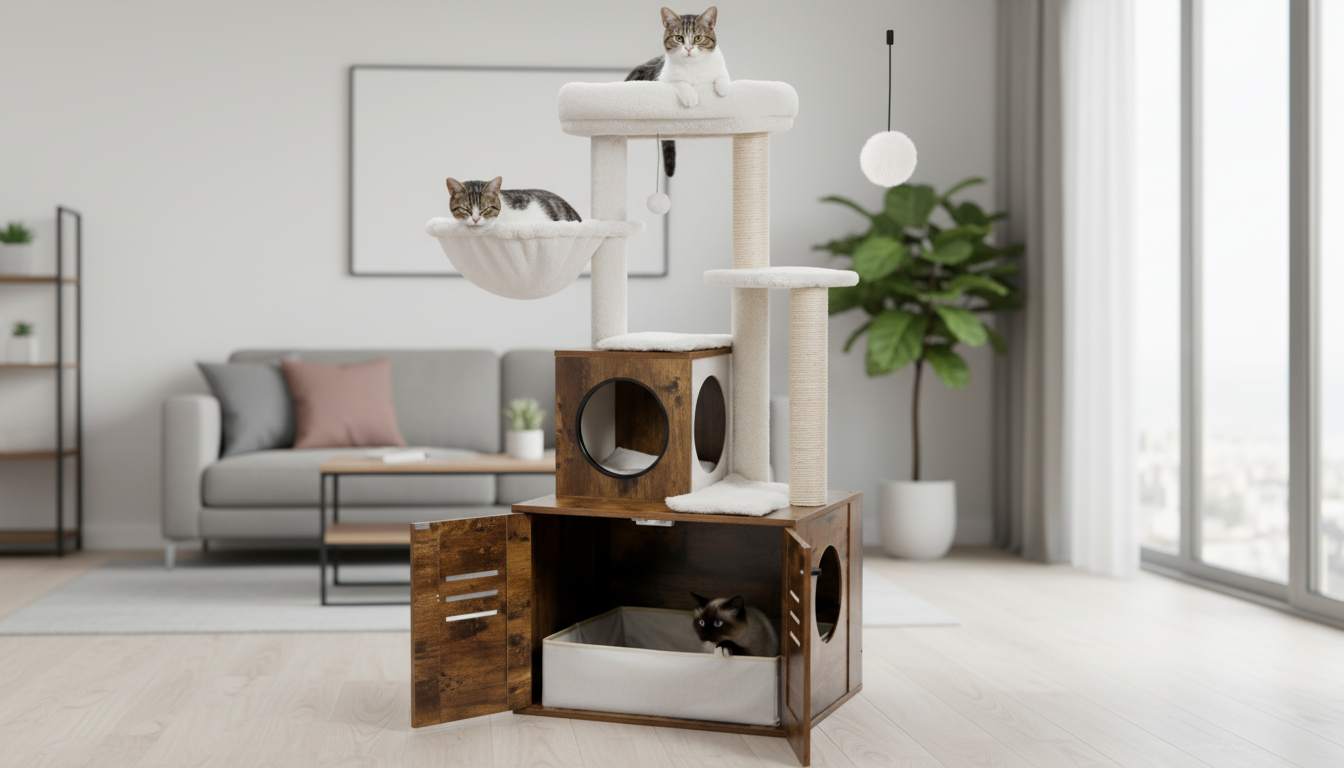
A space-smart cat tower can do more than add a perch—it can turn a scattered set of cat essentials into one organized, vertical station. The Multi-Level Wooden Cat Tower with Litter Box, Hammock & Scratching Posts combines climbing platforms, a cozy hammock, dedicated scratching areas, and a built-in spot for the litter box, helping keep a cat’s daily routine tidy without taking over the room.
What This Cat Tower Adds to a Home
- Combines play, rest, scratching, and litter access in one vertical footprint.
- Helps reduce clutter by consolidating common cat items into a single station.
- Encourages natural behaviors: climbing, perching, hiding, and scratching.
- Works well in apartments or rooms where floor space is limited but vertical space is available.
For many households, the biggest win is “one location to manage.” Instead of a separate litter corner, a separate scratcher, and a separate cat tree, the daily cat routine stays centered in one place—easier to clean, easier to maintain, and often easier for cats to understand as “their” zone.
Core Components and How Cats Use Them
- Multi-level platforms: Supports climbing routes and preferred high vantage points, which can help cats feel secure and engaged.
- Wooden structure: Often feels sturdier than lightweight fabric-only designs and is generally simpler to wipe down for everyday messes.
- Litter box area: Adds privacy and can help contain scattered litter when paired with a litter mat at the entry.
- Hammock: Provides a suspended lounging spot many cats prefer for warmth and gentle support.
- Scratching posts: Gives a dedicated place to scratch, helping redirect that behavior away from couches or rugs when the tower is placed in a high-traffic cat area.
Scratching is a normal, healthy behavior—cats use it to shed nail layers, stretch their body, and mark territory. For deeper behavior guidance, International Cat Care offers a practical overview of why cats scratch and how to support it appropriately: https://icatcare.org/advice/scratching-behaviour/.
Choosing the Right Spot in the Room
- Place near a wall or corner to reduce wobble and create a secure feel for climbing cats.
- Avoid tight passageways where litter access becomes inconvenient or odors concentrate.
- If possible, position near a window for daytime perching and added enrichment.
- Keep away from food and water bowls to support good litter habits.
- Allow clearance for any door/entry space (if the litter area is enclosed) and for easy scooping access.
A good “cat tower + litter” placement balances privacy with convenience: cats want the litter area to feel safe, while humans need it easy to scoop daily and keep fresh. If the room has hard floors, consider placing a mat at the litter entry and ensuring the landing area isn’t slippery.
Sizing and Household Fit
- Consider the cat’s size and agility: Taller structures suit climbers; shorter step distances help seniors.
- Multi-cat homes benefit from multiple resting zones: Cats can spread out vertically instead of competing for one “best spot.”
- For timid cats: The enclosed litter area can double as a quiet hideout if the entry feels comfortable.
- Check hammock size and attachment style: It should support the cat’s weight and typical sleeping positions without sagging too much.
- Confirm litter pan fit: If litter box dimensions are flexible, verify that the intended pan fits the enclosure opening and interior space.
Quick Fit Check for Common Households
| Household situation |
What to prioritize |
Why it matters |
| Small apartment |
Vertical layout, easy-clean surfaces |
Consolidates essentials and simplifies upkeep in tight spaces |
| Two cats |
Multiple perches + separate lounging spots |
Reduces conflict and gives each cat a preferred level |
| Senior cat |
Shorter step-ups, stable base placement |
Supports safer climbing and more confident movement |
| High-energy cat |
More levels + sturdy scratching areas |
Channels activity into climbing and scratching rather than furniture |
Odor, Litter Tracking, and Daily Maintenance
- Scoop daily and keep a small handheld broom nearby to reduce tracked litter around the base.
- Use a litter mat at the entry to catch granules before they spread through the room.
- Wipe wood surfaces regularly with pet-safe cleaners; avoid harsh chemicals and strong fragrances.
- Vacuum or lint-roll hammock and fabric areas to reduce hair buildup.
- Replace worn scratching surfaces before they shed fibers or lose appeal.
Keeping the litter area clean is about comfort as much as odor control—many cats will avoid a box they consider “too dirty.” The ASPCA’s cat care resources include helpful reminders on healthy litter box routines and overall wellbeing: https://www.aspca.org/pet-care/cat-care.
Comfort, Enrichment, and Cat Adoption Tips
Safety and Stability Basics
Product Options In Stock
FAQ
Will a cat use an enclosed litter box area inside a tower?
Most cats adapt if the entry is easy and the box is kept very clean. Introduce it gradually, keep airflow around the area, and avoid placing food or water nearby.
How often should the scratching posts be replaced or refreshed?
Replace or re-wrap when the surface becomes smooth, loose, or starts shedding. Cats that scratch frequently may need a refresh sooner to keep the post appealing.
Is a wooden cat tower easier to clean than plush cat trees?
Wood surfaces usually wipe clean more easily, which helps with day-to-day upkeep. Fabric parts like hammocks still need vacuuming or spot-cleaning, so a mixed routine works best.
Recommended for you









Leave a comment