
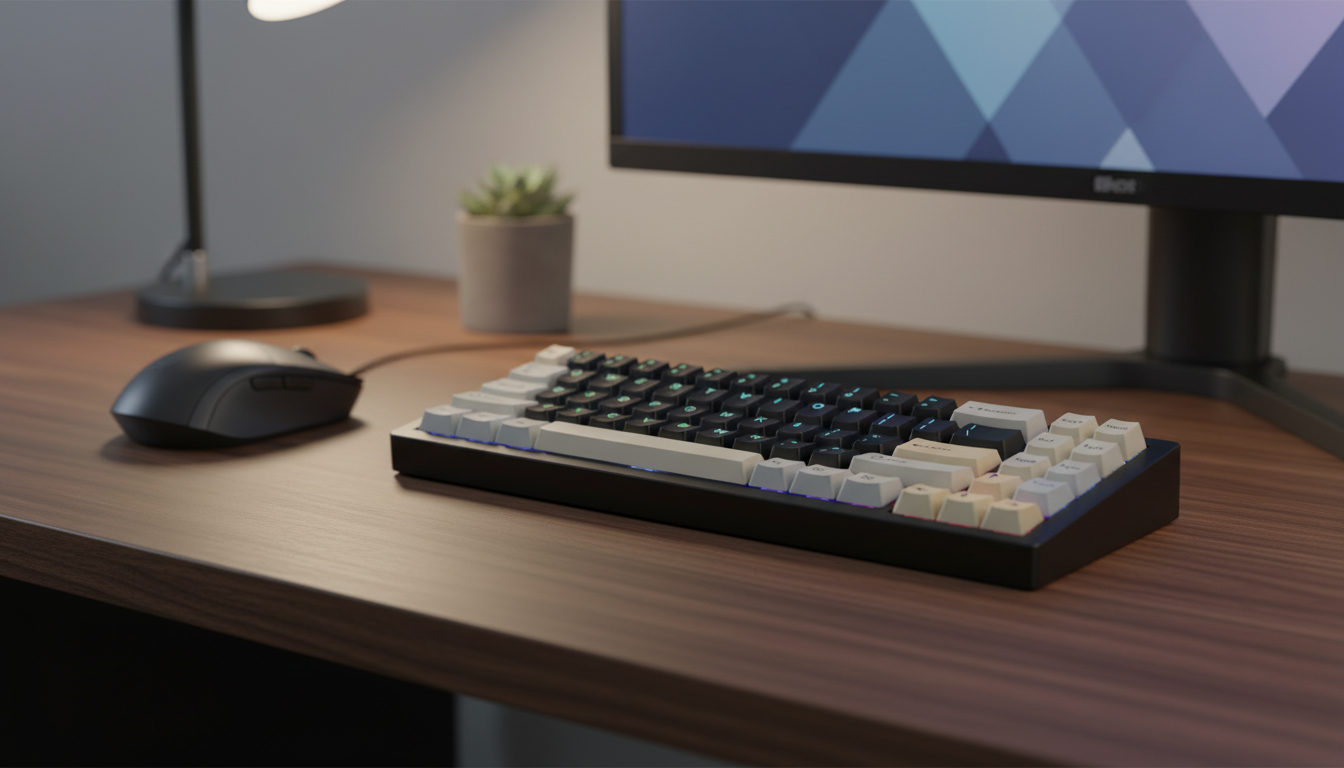
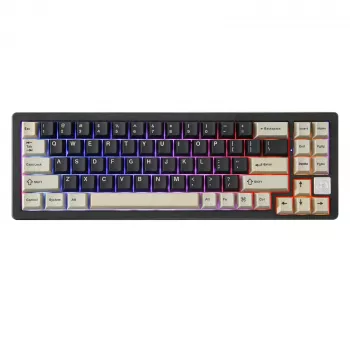
A compact 68% layout keeps the essentials close—arrows and navigation keys included—while freeing desk space for wider mouse movement. This keyboard pairs a rigid CNC aluminum build with wireless convenience, hot-swappable switches for easy customization, and RGB lighting for a clean gaming or workstation setup. For more guidance, see Reviews by Kindlefirehditaly | Page 3.
A 68% mechanical keyboard is designed to feel familiar while cutting the bulk. You still get dedicated arrow keys plus a slim nav cluster, so common tasks like scrolling through code, stepping through spreadsheets, or fine-tuning edits don’t require awkward key combos. For further reading, see Reviews by Aleksandar Vajagic.
For many setups, the biggest daily benefit is the extra space to the right of the keyboard. That space can translate into smoother mouse tracking, a more comfortable shoulder position, and less desk crowding when a mic, audio interface, tablet, or notebook is also in play.
The case is more than aesthetics—it affects how the board feels and sounds every time you type. A CNC aluminum chassis typically adds rigidity, which helps the keyboard stay steady during fast key presses and long sessions.
That extra weight can also make small details feel more premium: less rattling when you adjust the board, a more “anchored” sensation when pressing modifiers, and a cleaner look that matches metal monitor stands or laptop docks.
Hot-swappable keyboards are built for experimentation and easy maintenance. Instead of soldering, you pull a switch and press a new one into the socket—ideal if you want to tune the feel for gaming, typing, or a mix of both.
If you’re comparing switch families, it helps to understand the common categories (linear, tactile, clicky) and actuation characteristics. Manufacturer resources like Cherry’s MX switch overview are useful for getting a baseline on how different stems and springs typically behave.
Wireless is about more than aesthetics—though a cable-free board does look cleaner. It also makes day-to-day adjustments easier, like sliding the keyboard out of the way for handwriting, repositioning for a controller, or switching between a desktop and a laptop on the same desk.
If you rely on Bluetooth compatibility across multiple devices, the official Bluetooth Core Specification offers a deeper look at how Bluetooth standards and profiles are defined across hardware.
RGB can be subtle and functional rather than flashy. For late-night sessions, lighting helps reduce hunting for keys and can add gentle ambient glow behind a monitor or under a shelf—especially when paired with a reflective metal case.
| Feature | What it means | Why it matters |
|---|---|---|
| 68% layout | Compact layout with arrow keys | More mouse room; still practical for everyday use |
| CNC aluminum case | Rigid metal chassis | Stability, durability, and a more solid feel |
| Hot-swappable switches | Swap switches without soldering | Easy tuning of sound/feel; simple repairs |
| Wireless operation | Cable-free desk setup | Cleaner look; flexible placement |
| RGB lighting | Adjustable lighting effects | Low-light visibility and personalization |
It means the keyboard’s switches can be removed and replaced without soldering, usually with a simple switch puller tool. Compatibility depends on the hot-swap socket and the type of switch pins the keyboard supports.
Yes—68% is a balanced compact layout that keeps arrow keys and a small set of navigation keys while dropping the number pad. The main trade-off is entering lots of numeric data may be less convenient compared with a full-size board.
Yes. Higher brightness and animated effects draw more power, so dimming the lights or using a static color typically helps extend time between charges.








Leave a comment